
I LOVE WORDS…WHICH IS WHY I’M GETTING RID OF A FEW.
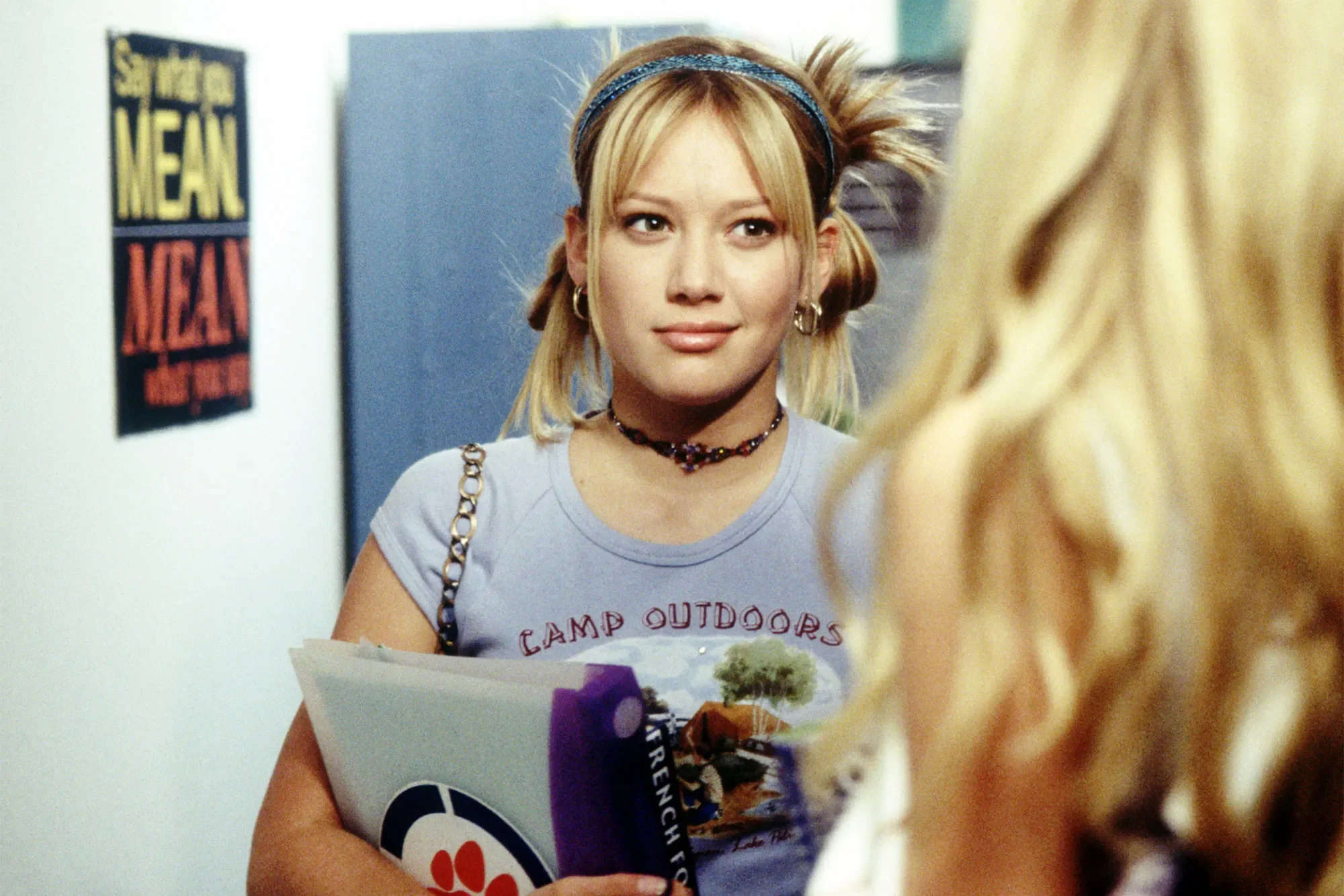
Image Description: TV show lead Lizzie McGuire wears a choker necklace, headband, and pigtails, standing in front of a poster that reads “Say what you mean, Mean what you say”.
Hilary Duff was my childhood ICON (just a touch below the Olsen twins, specifically Mary-Kate), and her famous “Think before you speak” commercial, aimed against derogatory hate speech used amongst youth, that aired in the early 00s is still remembered today. Could I now reach that same level of impact in advocating for deeper awareness of the language we use socially? Yeah definitely not, but let’s give it a go.
I love language.
I speak English, 6th grade level French, can finger spell in ASL, and know how to say “Crunchy Fun Time” in German (don’t ask). Words of affirmation is how I best communicate my feelings with loved ones; writing is my way of purging my overflowing mind so as not to combust; and I think an extensive vocabulary and good penmanship are two of the sexiest qualities one can possess. A collection of sounds and shapes, perfected and evolved over time to best convey our thoughts and feelings with one another, it delights me how varied language is. It astounds me whenever I learn of a word in another tongue for which there is no direct translation in my own. Perhaps the residents of the place where that word was born have simply undergone circumstances that could never compare to mine; or alternatively have found a way to more fully encapsulate our universal experience for which I didn’t even know I was lacking until that very moment.
When I was diagnosed with epilepsy at 18, experiencing dozens of concussions as a result, my brain started working differently. My memory worsened, and my relationship to language changed. So often I would have that feeling of having a word on the tip of my tongue, and yet burrowed too deep to find. Thesaurus.com became a tab on my computer that never closes. The words I used, in my work and everyday life, became all the more deliberate. Magnifying the sounds and shapes I was using, I noticed that there were a few that could do with being retired, and this year I made a resolution to utilize language all the more intentionally.
I feel like Akeelah standing at the podium as I make my case for the weight that our words hold, good and bad, and why we should care. The meaning of words shift over time, or situationally. Their original context might be so deeply embedded that it’s easy to forget, or become ignorant to all together. There are two words in specific that I wanted to challenge myself to stop using, and they’re terms that likely wouldn’t get a second glance from most of us if our baby cousins uttered them on the playground. When most of us say that we’re being “dumb”, or that the event we went to was “lame”, we don’t mean to draw comparison to somebody who is non-verbal or physically disabled—but that’s what we’re doing. Having loved ones with disabilities, and having a disability myself, something about the reality of these everyday words just hasn’t been sitting right with me. How have these two fragments of our cultural lexicon, derived from attributes of members of our community, but now used almost exclusively to maim, stuck around so long?
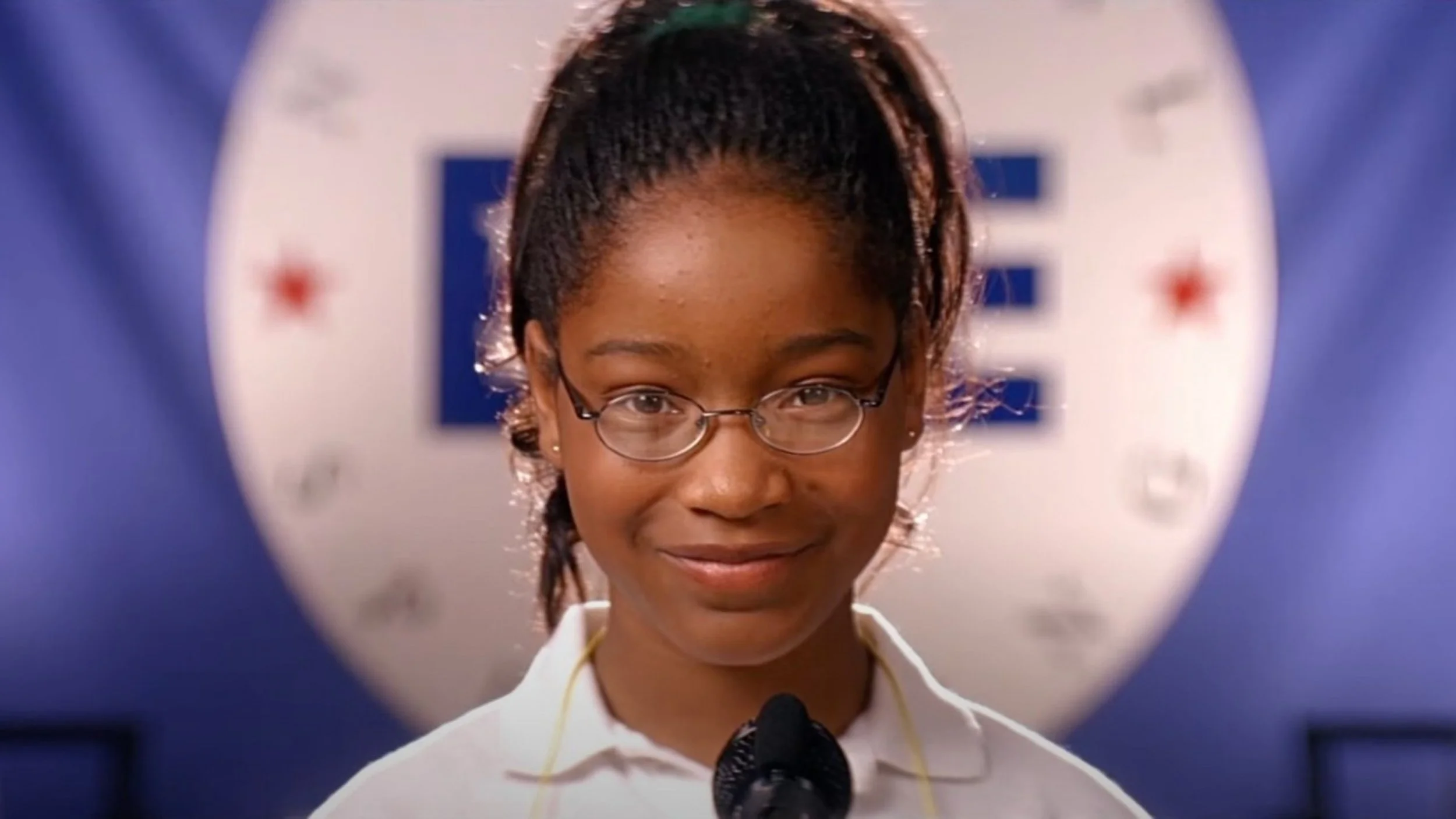
Snapshot of a young Keke Palmer (legend) playing Akeelah Anderson in “Akeelah and the Bee” which if you’ve never seen—why did your parents hate you as a child? The movie follows Akeelah, a precocious young girl with a love of words, as she trains for the Scripps National Spelling Bee. I rewatched it the other night, and cried as I always do. It features Angela Bassett’s performance of a lifetime. This is not really related to anything, let’s carry on.
It’s often argued that words hold only the power that we provide them, but I truthfully find this perspective lacking. While I can see where the Hermione Granger-esque “Fear of the name only increases fear of the thing itself” mindset is coming from—generally it seems to be a lazy excuse for not acknowledging our own shortcomings, encouraging heel digging, and a refusal to evolve for the better. I don’t believe we can wipe away decades of history embedded in a word, just because we wish it so. It doesn’t matter that you personally are not ableist, racist, sexist, homophobic, when generations of people before you were, and many amongst us today still are. While some folks have reclaimed words previously used to batter and bruise as their own, as an act of resistance, I don’t believe that those for which these words were not originally aimed have the same right at all.
Bringing it back to the era of Duff’s “Think before you speak” campaign, I remember the first time I ever heard the word “gay”, a favourite intended insult amongst little boys in school yards during the early 2000s. I had no idea what the word meant at the time, but I knew from the tone with which it was being delivered that it was bad. One evening while my mother was giving me a bath, I told her what I had heard and how I fundamentally agreed with the word’s perceived negative connotation. My mother, who volunteered at the Pride festival that we attended every year of my childhood, calmly asked why I felt this way. I embarrassedly fell silent, as I had no real response. She explained to me what the word meant; how sometimes girls loved girls, and boys loved boys, in the same way that Mummy loved Daddy. My opinion immediately flipped; seeing absolutely nothing negative in this definition, a word in my vocabulary went from potential insult, to no-big-deal descriptive factor of some of the people that I loved most just like that. Language is passed on innately, with many of us not thinking to pause and question what it is we’re actually saying, and unfortunately these habits often still extend past childhood. On the other hand, through conversation and compassion we might just as easily switch our understanding of language to use more accordingly.
Since setting this goal for myself, to remove two monosyllabic sounds from my personal glossary, I’ve been stunned by how often these words still slip from my mouth as they have done so casually for years. It’s an intimidating, tiresome, and for some potentially irrelevant feat, to take on the evolution of ones own vocabulary. This might seem like something small to get hung up on, but as a writer, a lover of language, and a human being with a heart that thumps very deeply, this is something that’s important to me. Whether you choose to actively participate or not, language will continue to expand and slash around us, and I would like to be a small voice on that jury that helps influence what goes where.
Let’s explore words that don’t come at the price of insulting our peers, explain our feelings more broadly, accurately, and pierce deeper. The guy who ghosted you wasn’t being “dumb”; his choices were ludicrous, irrelevant, and imbecilic. That nightclub you waited an hour just to get in to where everyone was too cool to dance wasn’t “lame”; it was bottom-rung, small-potatoes, second-banana. Wether you agree with my take, are intrigued to reevaluate the words in your own everyday lexicon (or not), I think this is a conversation worth having, with words, and with love.
